
Belle-Île-en-Mer: Where Brittany’s Wild Coast Kept Its Light
Forty-five minutes off the coast of Quiberon, past the point where the ferry stops hugging the mainland and the Atlantic opens up in earnest, Brittany’s largest island rises out of the water. Its name is almost too simple for what it describes: Belle-Île — the beautiful island. Sailors have used the name for centuries, long enough that no one now remembers whether it was meant as fact or as wishful thinking. Either way, it has held.
Belle-Île-en-Mer is small enough to circle by car in a day and large enough to disappear into for a week. Roughly 7 kilometers by 9, it is divided into four communes — Le Palais, Sauzon, Bangor, and Locmaria — each with its own harbor rhythm and its own light. Le Palais, the main port, is guarded by the Citadelle Vauban, a fortress begun in the 16th century and reinforced two hundred years later by the military engineer whose name it now carries. Today the citadel holds the island’s museum, but its stone walls still do what they were built to do: mark the line where the sea stops being scenery and starts being a threat to be managed.
The Coast That Painted Itself
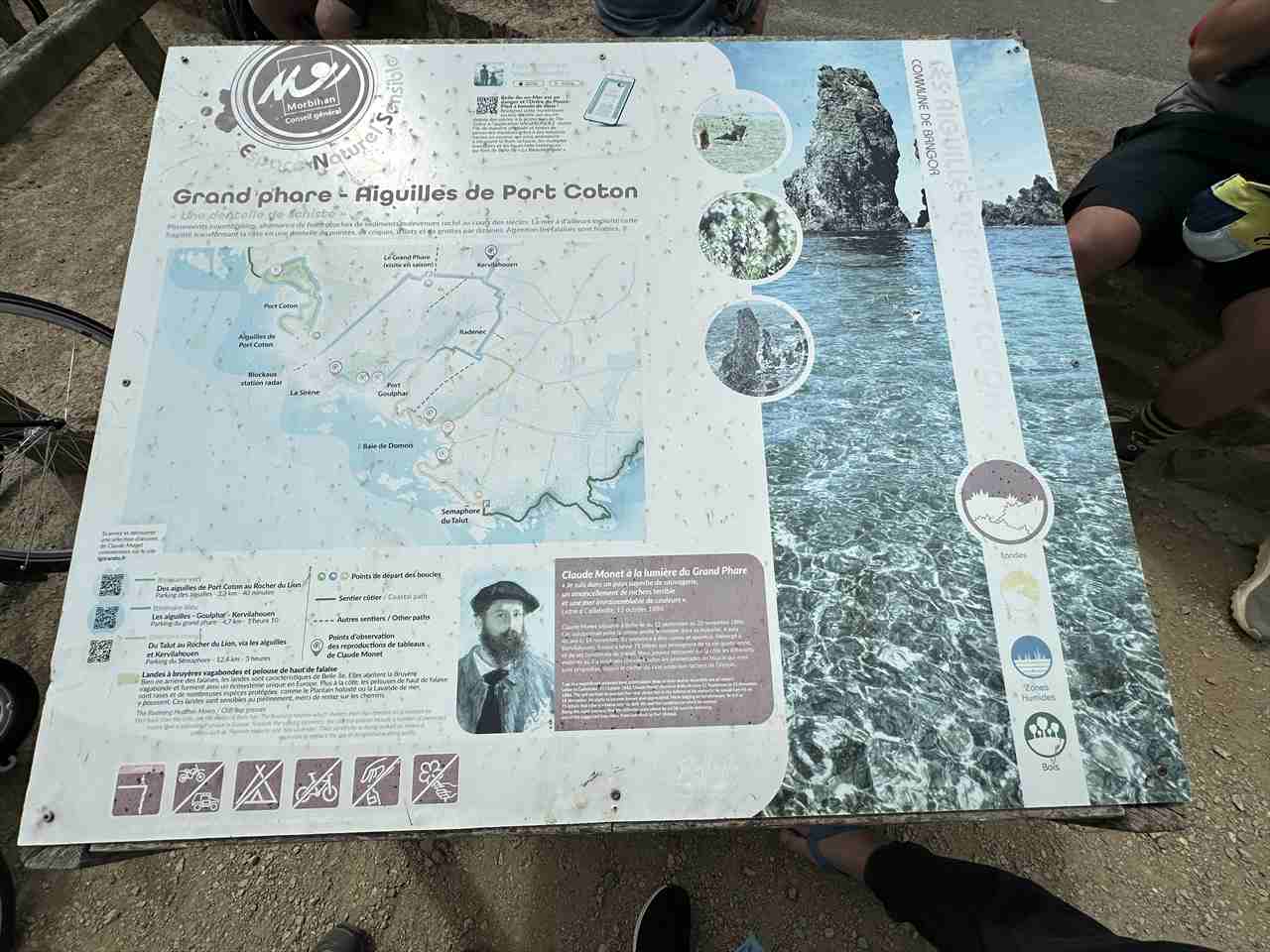
Walk or drive to the western side of the island, toward Bangor, and the landscape turns from postcard to something closer to confrontation. This is the Côte Sauvage — the wild coast — where the Atlantic has spent millennia carving the black rock into spires, arches, and blowholes. The most famous of these, the Aiguilles de Port-Coton, take their name from the foam that gathers around their base in rough weather, piling up in tufts that look, from a distance, like drifts of raw cotton.
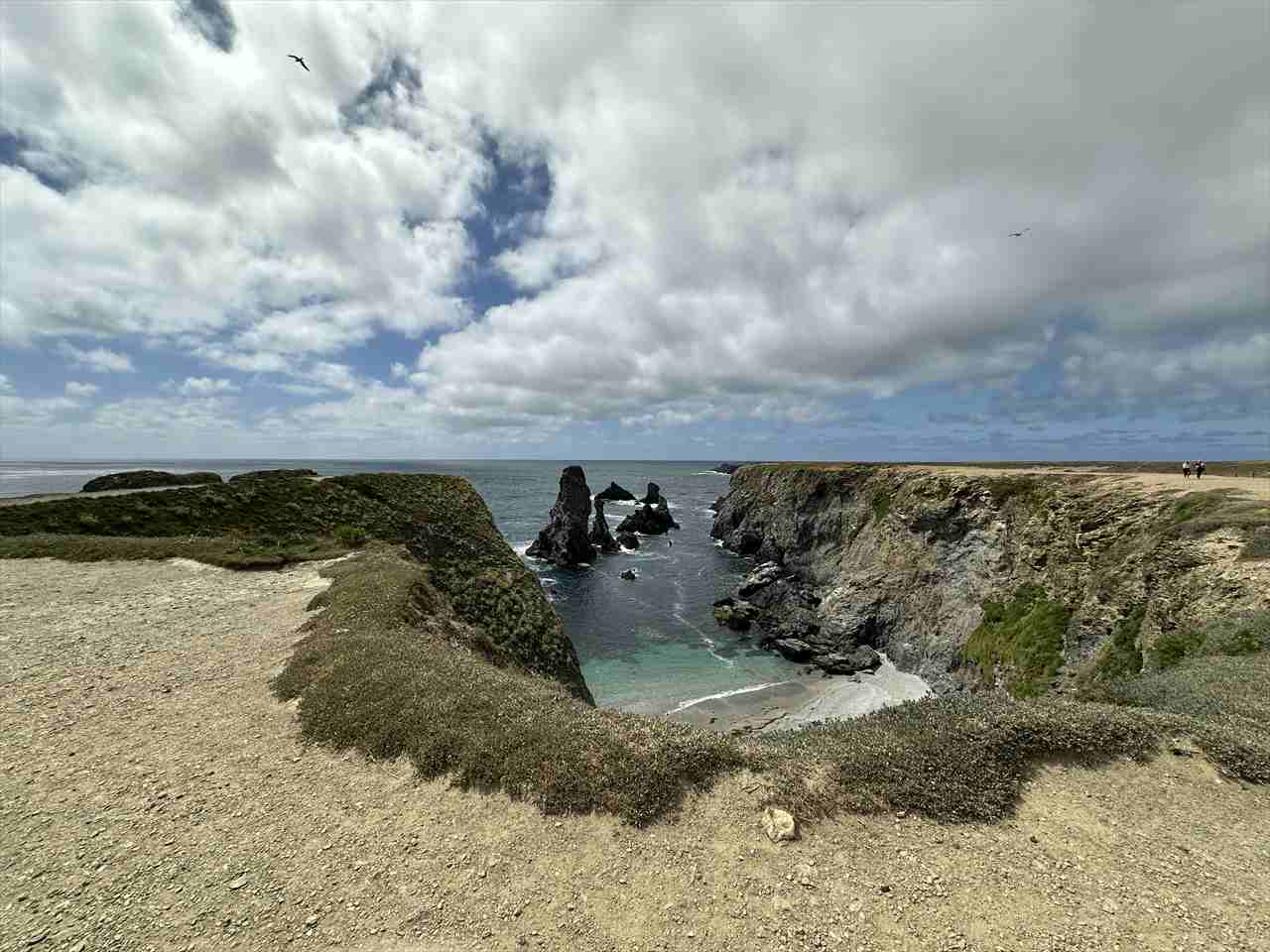
In September 1886, Claude Monet arrived at Belle-Île intending to stay a few days and stayed for 74. He worked through storms that kept him lashed to his easel with rope, and by the time he left in late November he had completed 39 canvases, many of them studies of these same needles of rock under shifting weather. The paintings did more than record a landscape — they introduced it. Before Monet, the Aiguilles de Port-Coton were a local landmark. After him, they became one of Impressionism’s enduring images of the sea.
Monet was not alone in finding something here worth capturing. In 1847, a younger and still-unknown Gustave Flaubert passed through the island with his friend Maxime du Camp, an excursion he later folded into his early travel writing. Decades afterward, the Australian painter John Peter Russell settled at Goulphar, on the wild coast, where he built a house with his wife, the Italian-born model Marianna Mattiocco — a favorite muse of Rodin — and hosted Monet himself for dinner during that long 1886 stay. Locals called their home “Le Château de l’Anglais.” Marianna raised eleven children there, hosted a small colony of visiting artists, and, by her own wish, was buried on the island, in Bangor, when she died. Russell’s decades of isolation on the island — deliberate, almost monastic — shaped a body of work that is only now being rediscovered outside France and Australia.
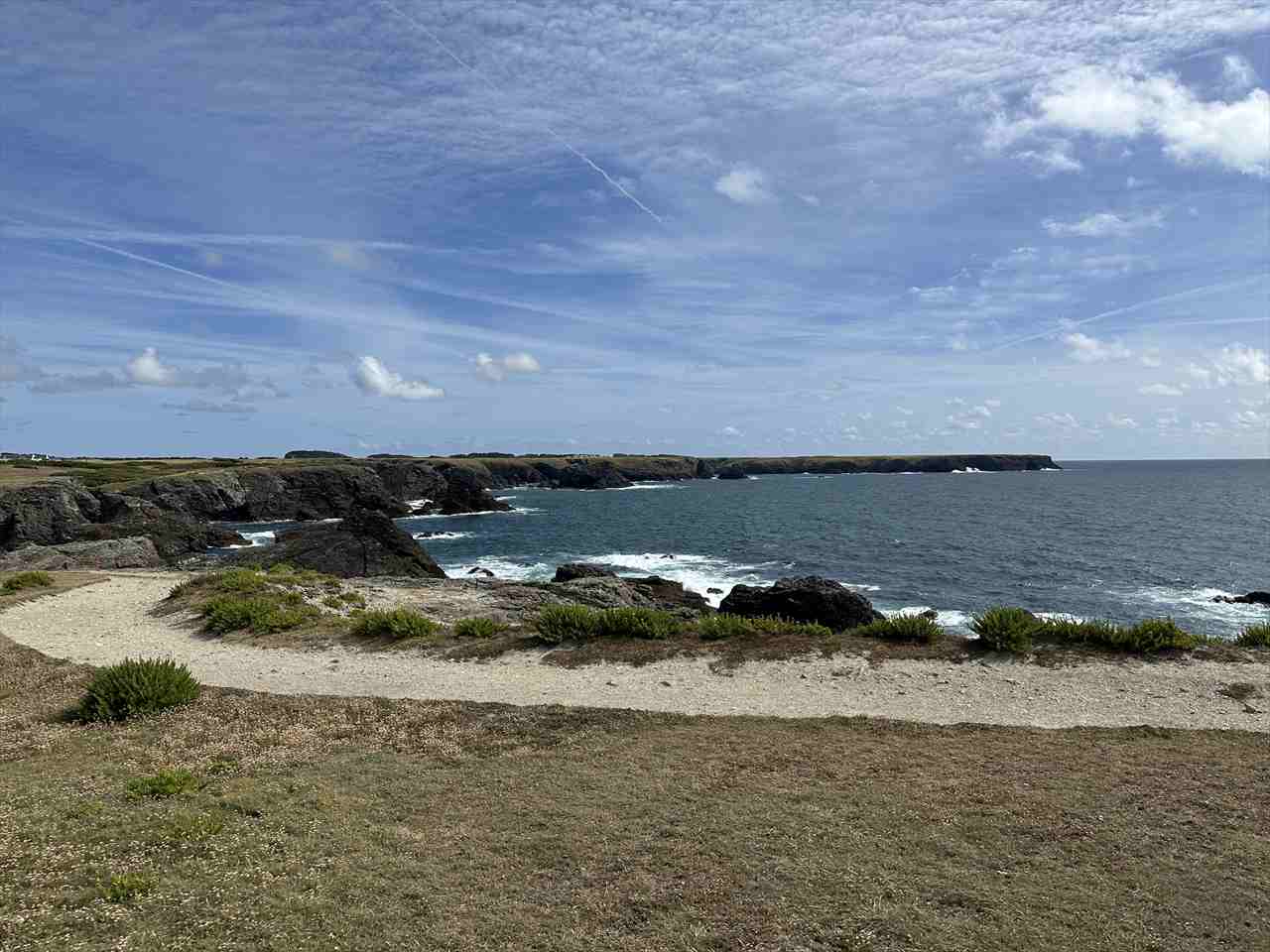
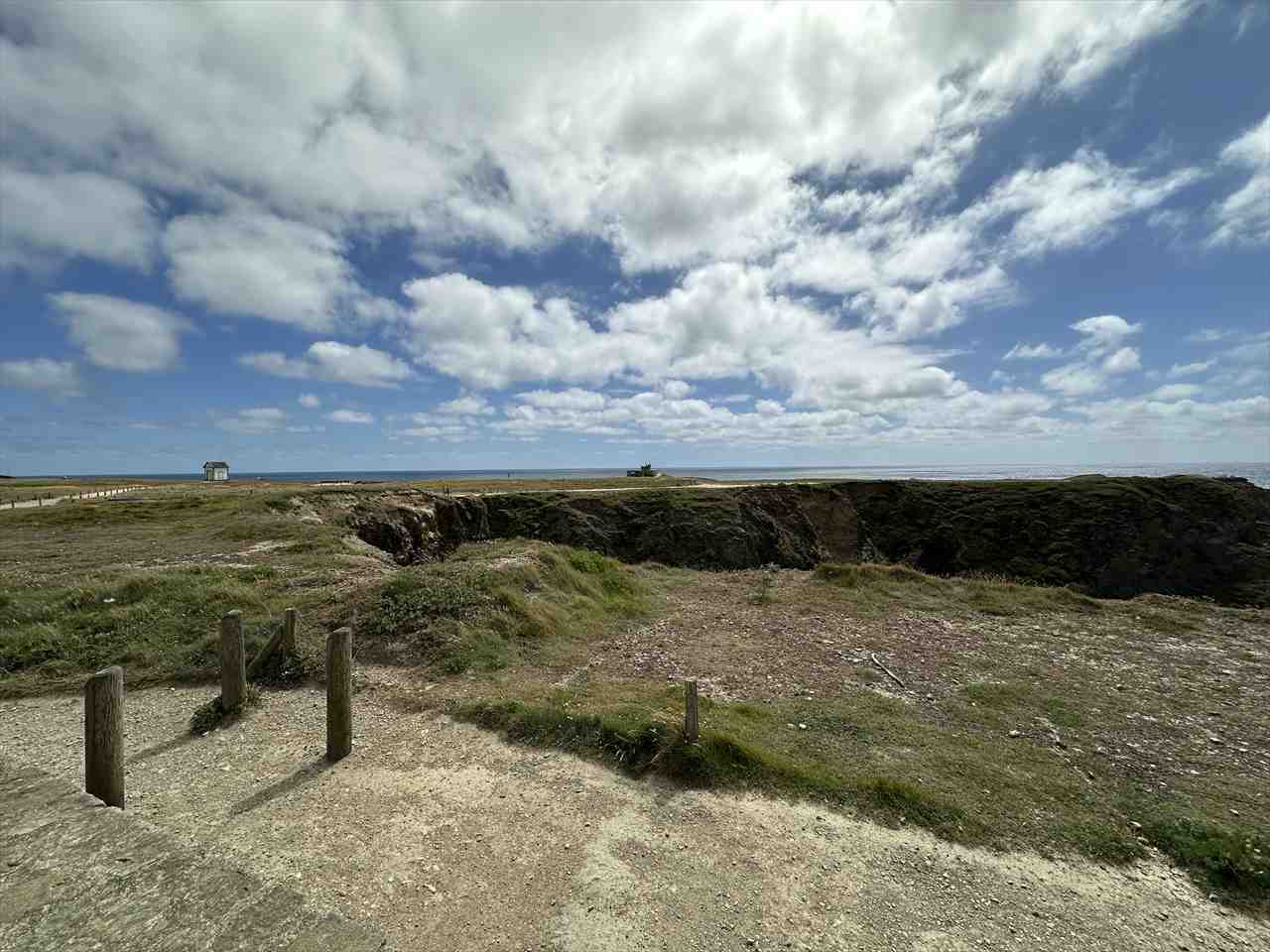
Following the coastal path north from the Aiguilles, the cliffs give way to the Grotte de l’Apothicairerie, a sea cave whose rock formations and once-thick colonies of nesting cormorants reminded early visitors of an apothecary’s shelves lined with jars — hence the name. The stairway down to the cave floor has long been closed for safety, but the view from above — a dark mouth of rock taking the sea’s full weight, wave after wave — needs no closer approach to make its point.
A Fort Turned Stage
At the island’s northern tip, at the Pointe des Poulains, stands a small, square fort that has nothing military left in it. Sarah Bernhardt first saw Belle-Île in the summer of 1894, brought there by the painter Georges Clairin, and was taken enough with the place to buy the disused fort on the spot. Over the following years she added a studio, guest rooms, a garden, a room for rehearsing plays, and eventually an open-air theater built into the rock. She returned nearly every summer for the rest of her life, trading the stages of Paris for a stage of her own facing open water. The fort still stands at the point where the land runs out, a reminder that for more than a century, this island has been a place people came to in order to work — not only to rest.
The Everyday Island
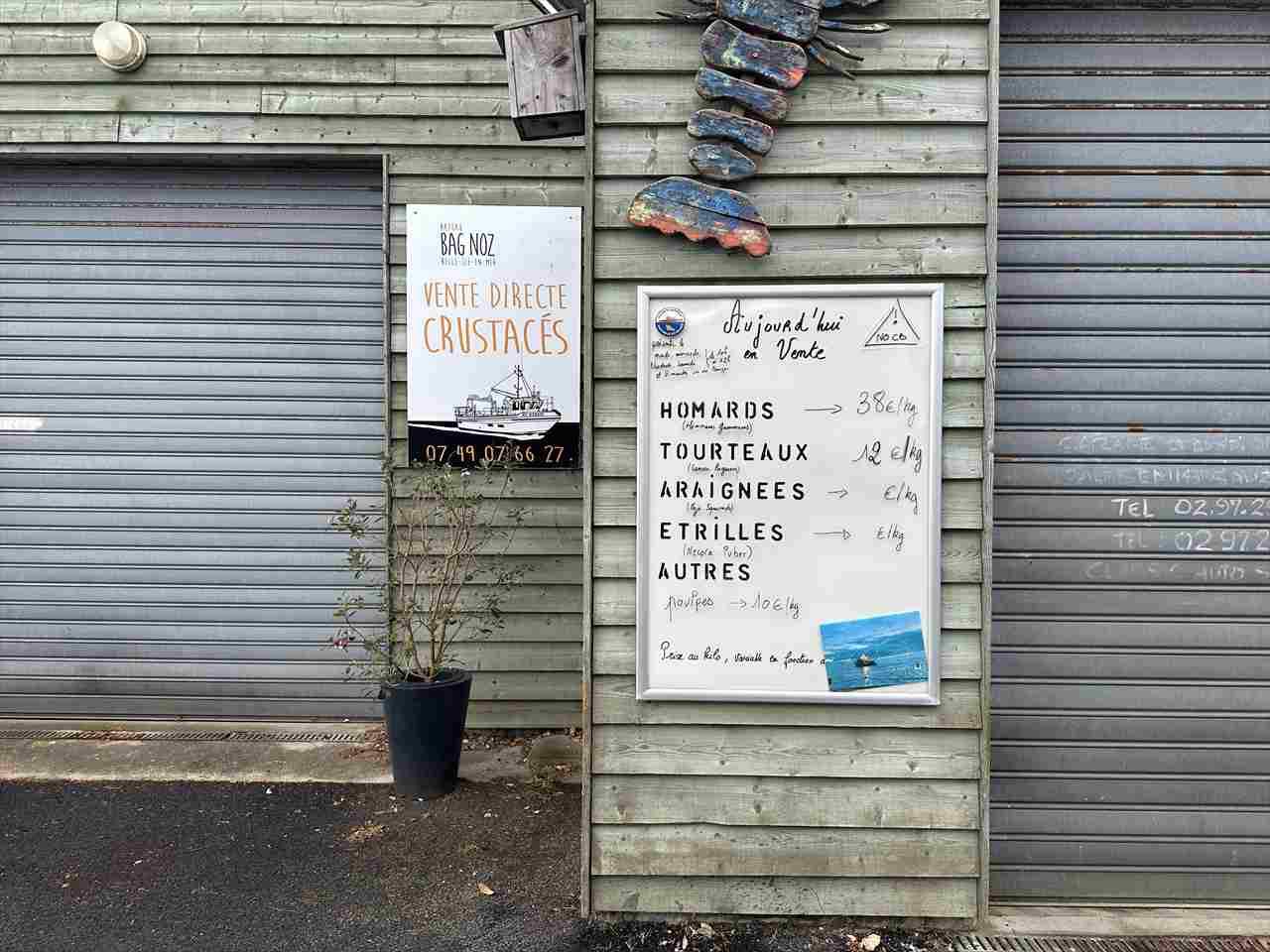
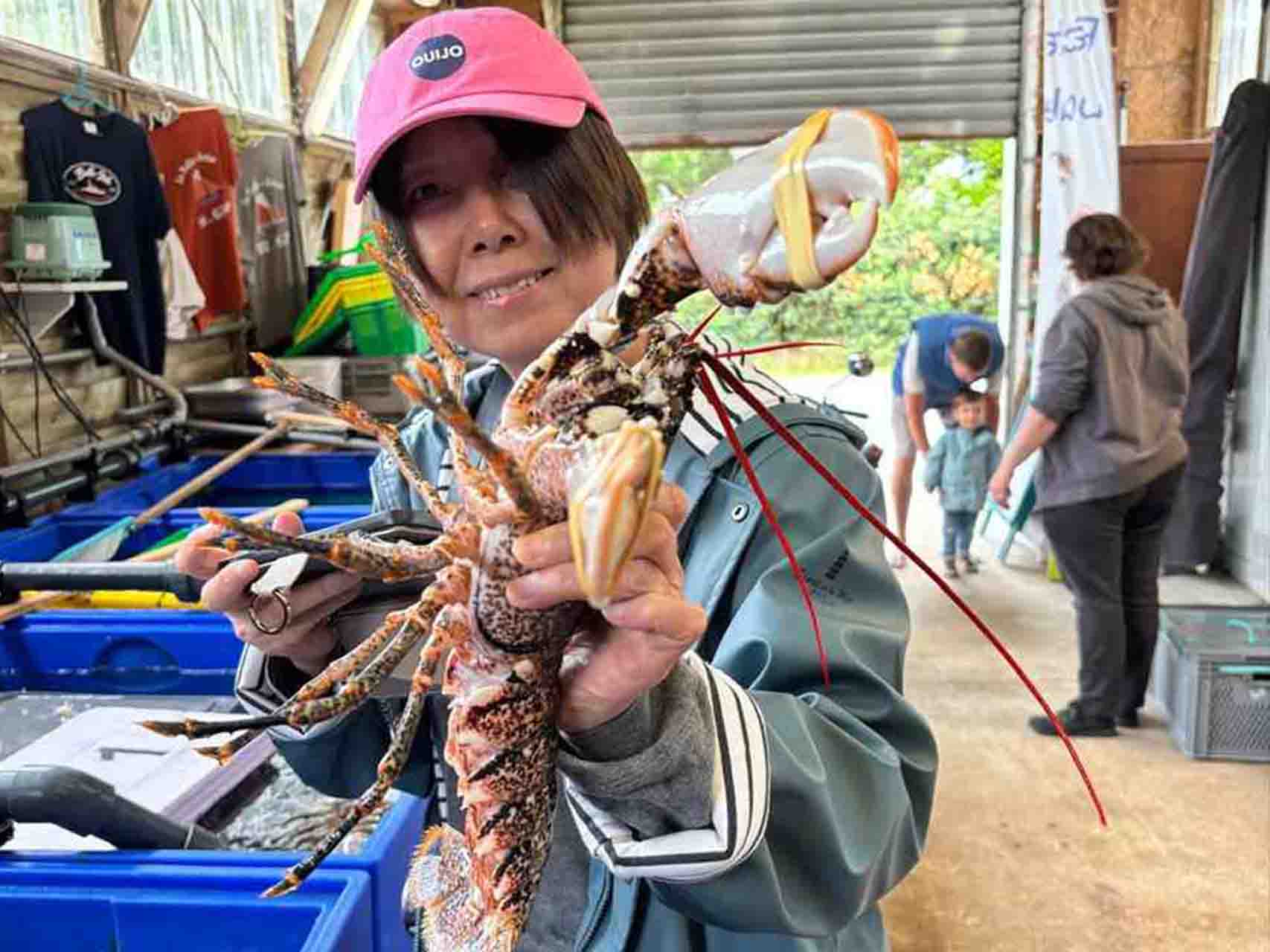
Away from the landmarks, Belle-Île’s culture is set by the sea in quieter ways. In Sauzon, a fishing port on the calmer northern coast, hand-lettered signs still advertise the day’s catch sold straight off the boat — spider crab, lobster, tourteau — the kind of transaction that has changed little in method even as the prices have. Along the dune paths, official notices remind walkers that the beach is not simply a stretch of sand for leisure but a living system: seaweed and driftwood washed ashore feed insects, which in turn help fix the first plants that anchor the dunes. Visitors are asked to leave the debris where the tide left it. It is a small, practical kind of conservation, but it says something about how the island understands itself — not as a backdrop, but as an ecosystem that happens to be beautiful.
In a small local museum near Locmaria, a weather-darkened seascape painting hangs with a handwritten caption referring to a 19th-century wreck off the coast — one of many such records scattered across the island’s churches and town halls. Belle-Île’s relationship with the sea has never been purely scenic. The same water that drew Monet to paint and Bernhardt to build a theater has, over the centuries, taken ships and sailors with it. The island’s beauty and its danger have always been the same fact, viewed from different angles.
Why the Light Stays
It is easy, and not entirely wrong, to describe Belle-Île through the people who made it famous — an Impressionist chasing weather, an actress building a stage at the edge of the water, a painter who chose exile over a career in Paris. But the island’s real hold on visitors and residents alike seems to lie somewhere more ordinary: in the particular quality of Atlantic light that changes by the hour, in villages still organized around the tide and the boat schedule, in a coastline that has not been smoothed into convenience.
Belle-Île does not perform for its name. It simply continues being what it has been for a very long time — beautiful, and unconcerned with whether anyone is looking.
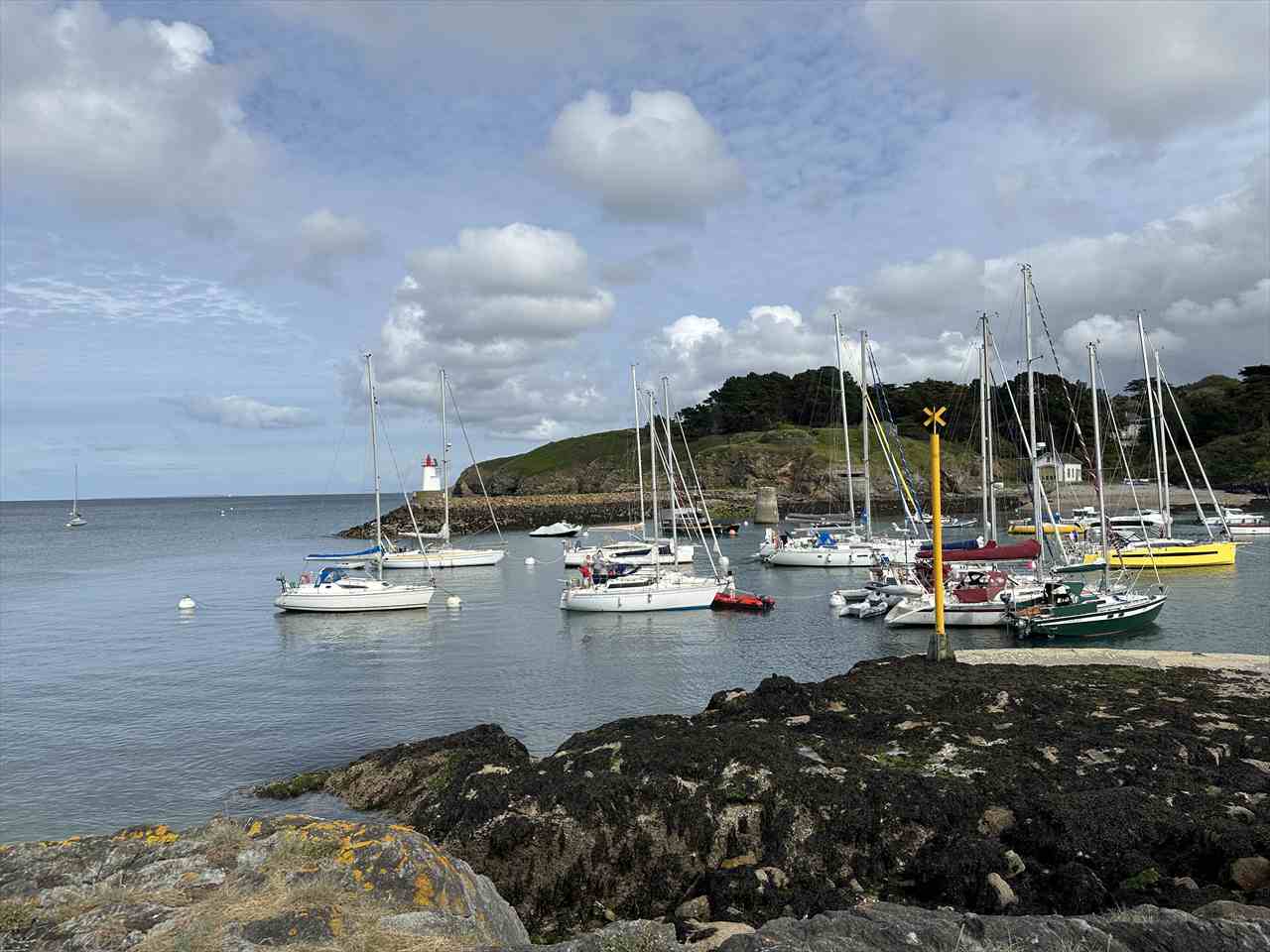
Belle-Île-en-Mer is reachable by ferry from Quiberon, with additional seasonal connections from Vannes, Port-Navalo, Le Croisic, and La Turballe.